Blenheim bomber
Promise at DawnThe Blenheim bomber is a recurring presence in Romain Gary’s wartime account, linking the hope of active combat to a series of failed journeys and dangerous mishaps. In Africa, the aircraft is at once a scarce military resource, a vehicle for ferrying across the continent, and a machine that repeatedly returns its crew to the ground. Its episodes give physical form to the narrator’s frustration at being unable to fulfill his promise to fight the enemy, while also showing the human cost of a service marked by too many crews and too few aircraft.
The Blenheim in African service
During the narrator’s tour in Africa, Blenheims appear in several different settings and roles. The shortage of machines left crews with too little to do, and boredom and frustration became defining features of their service. Seeking a transfer, the narrator applied to join a Royal Air Force unit ferrying aircraft along the route from the Gold Coast through Nigeria, Chad, Sudan, and Egypt. The planes arrived in crates at Takoradi, were assembled there, and were then flown across the continent toward the battlefields in Libya. The Blenheim thus belonged to a long logistical chain: it was meant to carry airmen and aircraft toward a front that otherwise remained distant.
The bomber also figures in the narrator’s posting with three Blenheims to Bangui, in French Equatorial Africa. Their task was to provide air cover for a territory where, as the narrator wryly observes, mosquitoes were the only serious threat from the sky. That mismatch between military aircraft and the danger they were assigned to meet sharpened the airmen’s sense of uselessness. Their dive-bombing of the Governor’s Residence with light exercise bombs was a way of signaling their mood to the authorities, not a combat action against an enemy force.
A machine that fails on takeoff and in flight
One Blenheim overturned during takeoff and burst into flames. The narrator and the other pilot escaped with only slightly scorched uniforms. The episode compresses danger into a failed beginning: the aircraft never needed to reach a battlefield for its crew to face a potentially fatal accident. Their survival did not make the plane dependable; it marked another instance of the narrator being thrown back from the work he hoped to do.
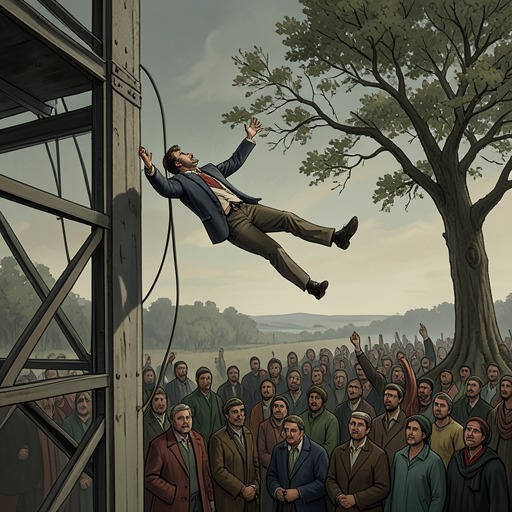
A later Blenheim journey ended more gravely. The narrator made only one trip with the aircraft-ferrying unit, and the bomber did not reach Cairo. It crashed in the bush south of Kumasi, killing the New Zealand pilot and the navigator while leaving the narrator physically unhurt. He helped dig a resting place for the dead with his hands and became overwhelmed by the aftermath. After remaining at the wreck for thirty-eight hours, he was found unconscious inside the fuselage, its roof shut, and half parched. The bomber had brought him neither to his destination nor to combat; it had become the site of bereavement and disorientation.
Repetition, frustration, and loss
The narrator places these accidents within a broader pattern of aircraft repeatedly falling from the sky. He describes being sent down with dismaying regularity, then picking himself up and trying again, with his mother’s last letter in his pocket and its confidence in his heroic deeds sharply at odds with his experience. In this recurring pattern, the Blenheim is not presented as a singular misfortune but as part of a service in which routine flights, scarce machines, and frustrated crews repeatedly intersect with danger.
The contrast is especially stark in the account of the Kumasi crash. The narrator survives without a scratch, while the pilot and navigator do not. His survival therefore brings no simple victory or reward: he is left to face the deaths, the burial, and the long wait for rescue. The bomber’s wreck makes visible the difference between escaping physical injury and escaping the consequences of catastrophe.
Narrative significance
Across these episodes, the Blenheim bomber carries the tension between military purpose and lived experience. It is assigned to ferry aircraft toward the Libyan battlefields and to provide air cover in Bangui, yet the narrator’s own account repeatedly turns from intended service to accidents, idleness, and grief. The aircraft’s practical role is inseparable from its failures: it overturns before a mission can begin, and on the narrator’s only ferrying trip it crashes before reaching Cairo.
The bomber also anchors the account’s irony. The narrator wants to meet the enemy, but the sky around him becomes a place of repeated interruption rather than combat. The Blenheims are not merely background equipment: their scarcity helps explain the crews’ frustration, their assignments expose the distance between duty and action, and their crashes bring that distance to a painful conclusion. In the African episodes, the aircraft makes the narrator’s thwarted promise materially present—an instrument intended to carry him forward that instead leaves him, again and again, on the ground.